


…Competitive pricing protects consumers from import-driven fuel price increases
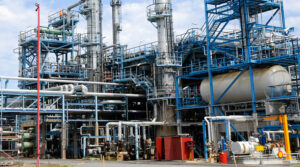
Dangote Petroleum Refinery & Petrochemicals has continued to protect Nigerian consumers from the impact of rising global fuel prices by maintaining stable domestic petroleum prices within a commercially sustainable range, despite mounting international cost pressures. This is according to the latest market intelligence report released by S&P Global Commodity Insights.

The report noted that international gasoline prices, freight rates and tightening global fuel supplies have all risen significantly, driving up the cost of importing refined petroleum products into West Africa. However, Dangote Refinery has continued to moderate local fuel prices, preventing these external pressures from being fully transmitted to the Nigerian market.

According to S&P Global Commodity Insights, importers supplying fuel to Nigeria are becoming increasingly worried about the sharp increase in global gasoline prices. Market participants attributed the development to higher international product values, coupled with rising shipping costs that have significantly increased the overall cost of fuel imports.
The report further revealed that traders now consider Dangote Refinery’s pricing to be the effective ceiling for petrol prices in Nigeria. As a result, importers are finding it increasingly difficult to transfer the higher international procurement costs to Nigerian consumers because domestic prices are being held down by the refinery’s competitive pricing.
One market trader quoted by S&P explained that while gasoline produced to Ghanaian specifications is currently attracting higher market premiums, Nigerian specification cargoes remain under pressure because Dangote Refinery has deliberately kept its coastal sales prices unchanged despite the sustained increase in international market prices.
Another trader observed that gasoline prices at the Lomé trading hub have now risen above Dangote Refinery’s sales prices, effectively eliminating any profitable arbitrage opportunities. According to the trader, importing petrol into Nigeria under the prevailing market conditions has become commercially unattractive because imported products can no longer compete with locally refined fuel.
The report stated that these developments are unfolding against the backdrop of rapidly increasing global freight costs. S&P Global Commodity Insights disclosed that the cost of transporting clean petroleum products from Northwest Europe to West Africa has climbed from US$29.70 per metric tonne at the end of June to US$37.12 per metric tonne, largely because vessels are being redirected to serve alternative international markets.
In addition to rising freight charges, diesel markets have also tightened considerably following a reduction in supplies of Russian Black Sea cargoes. This supply constraint has pushed up the prices of high sulphur gasoil across West Africa, further increasing the cost burden on importers of refined petroleum products.
Despite these unfavourable international market conditions, Dangote Petroleum Refinery has maintained its policy of gradual price moderation in the Nigerian market. Since the end of May, the refinery has reduced the ex-depot price of Premium Motor Spirit (PMS) by more than ₦200 per litre, Automotive Gas Oil (AGO) by ₦300 per litre, and Jet A1 aviation fuel by ₦520 per litre.
The refinery explained that these price reductions were implemented even though the crude oil currently being processed had been purchased when international crude prices were considerably higher than present market levels. It maintained that its pricing decisions are based on the actual cost of crude procurement rather than daily fluctuations in Brent crude prices.
According to the refinery, crude oil used for refining is typically acquired several weeks or even months before production under commercial agreements that are linked to monthly average pricing mechanisms. Consequently, temporary movements in international crude benchmarks do not automatically translate into immediate adjustments in local fuel prices.
Industry analysts believe the latest findings by S&P Global Commodity Insights further underscore the strategic importance of domestic refining capacity in protecting Nigeria from external supply disruptions and global market volatility. They argue that local refining has become a major buffer against imported inflation within the petroleum sector.
Analysts also observed that if Nigeria were still heavily dependent on imported refined petroleum products, the combination of rising international fuel prices, escalating freight costs and higher gasoline prices at regional trading hubs such as Lomé would almost certainly have resulted in significantly higher pump prices across the country.
The report further strengthens Dangote Refinery’s position as an increasingly influential player in petroleum pricing across West Africa. Market participants now regard the refinery’s pricing structure as the regional benchmark, making it extremely difficult for fuel importers to compete whenever international replacement costs exceed the refinery’s domestic prices.
According to analysts, the current market situation demonstrates one of the major strategic objectives behind the establishment of the 700,000-barrel-per-day Dangote Petroleum Refinery. They noted that the project was designed to shield Nigeria from global fuel market disruptions, eliminate dependence on imported petroleum products, conserve scarce foreign exchange and provide greater price stability for consumers and businesses.
With geopolitical tensions persisting, global petroleum product supplies becoming tighter and international shipping costs continuing to rise, analysts say Dangote Petroleum Refinery is steadily consolidating its position not only as Nigeria’s principal supplier of refined petroleum products but also as a stabilising force for fuel pricing and energy security across the West African region.


3 comments
Super impressed with the customer support. They answered my questions almost instantly. It is rare to find such a helpful team in this industry. krezbet
Super impressed with the customer support. They answered my questions almost instantly. It is rare to find such a helpful team in this industry. krezbet
The payouts are surprisingly fast and the games are top notch. Highly recommend checking out winbet289win if you want a reliable spot.