CEM REPORT | The Lagos Chapter of the Association of Mobile Money and Bank Agents in Nigeria held its 3rd Symposium on Thursday 28th April 2022 at the LCCI Conference and Exhibition Center, Alausa, Ikeja.


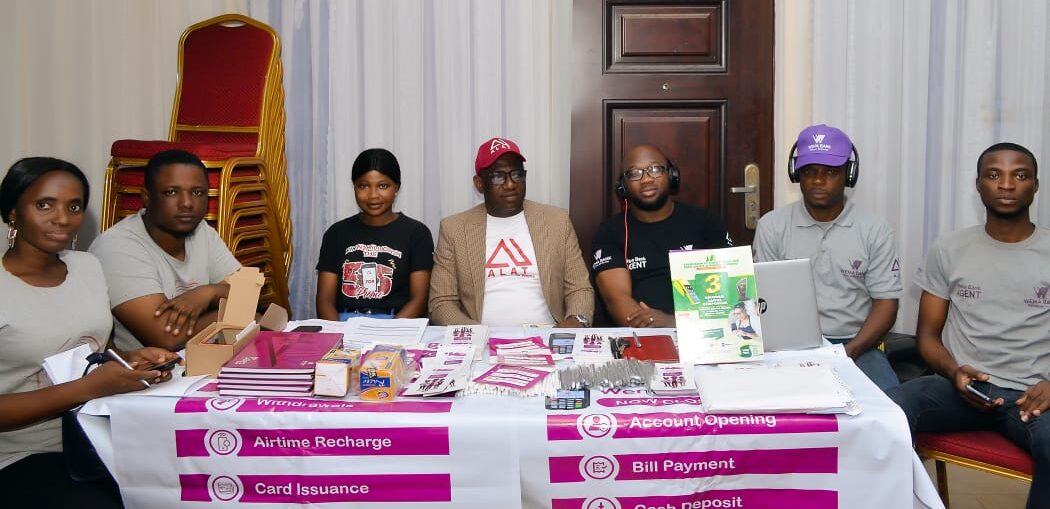




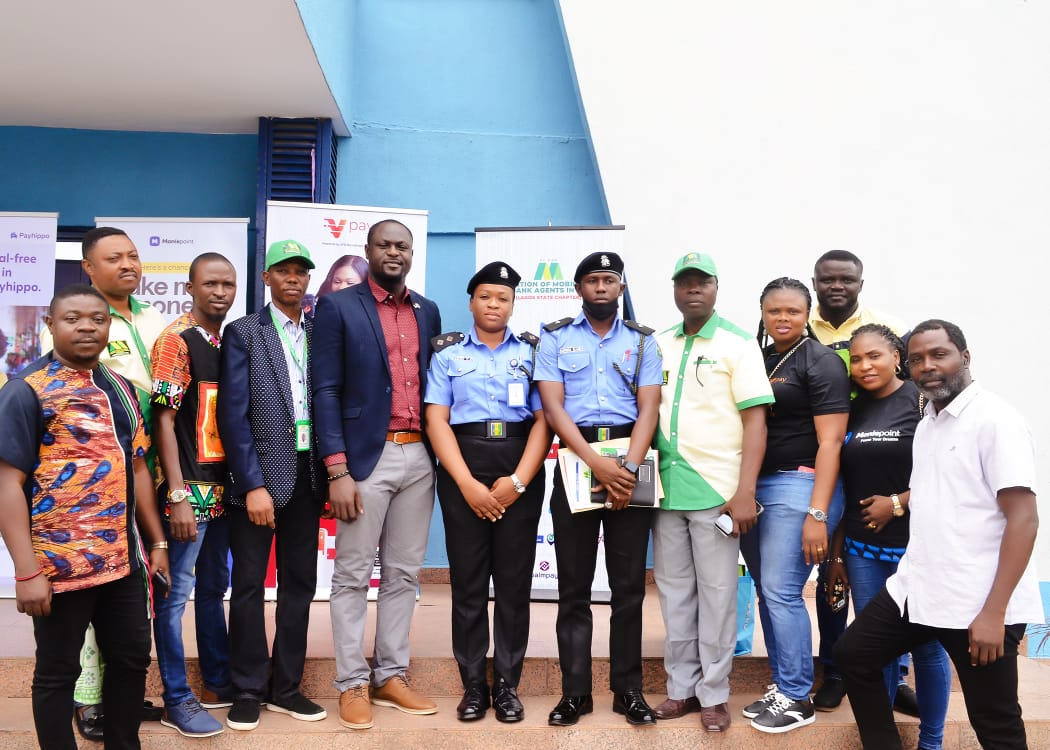
CEM REPORT | The Lagos Chapter of the Association of Mobile Money and Bank Agents in Nigeria held its 3rd Symposium on Thursday 28th April 2022 at the LCCI Conference and Exhibition Center, Alausa, Ikeja.

CEM REPORT | Flour Mills of Nigeria (FMN) has announced its acquisition of majority stake in Honeywell Flour Mills (HFM).
The information was contained in a release sent to the Nigeria Exchange Group, dated Friday, April 29, 2022, signed by Joseph Umolu, Flour Mill’s Company Secretary/Director of Legal Services,
The stake which sums to 76.75 percent will be acquired from two separate holders. HFM, 71.69 percent and 5.06 percent from First Bank.
The press release stated that the acquisition was closed at N4.20 being the final equity price per share.
“Given FMN’s parallel negotiation for both stakes (in HFMP and First Bank), culminating in the agreements being executed, the transaction was concluded at N4.20 being the final equity price per share.”
The press release also stated that the acquisition has been approved by all relevant regulators, such as, the Federal Competition and Consumer Protection Commission (FCCPC), Nigerian Exchange Limited (NGX), and the Securities and Exchange Commission of Nigeria (SEC).
FMN explained that the transaction will be done with two Special Purpose Vehicles (SPVs). The first will be an FMN subsidiary which will hold 60% of the acquired stake, while the rest will be held by Excelsior Shipping, one of FMN’s major shareholders.
[READ ALSO] Wema at 77, Alat to Open 1million Accounts on May 2nd
Furthermore, FMN added that the acquisition will be financed through cash and debt funding.
“For FMN, management is working on a split of cash and debt funding, as it believes sole cash funding is not optimal.”
HMF is expected to remain as its own entity for now and after the acquisition is officially concluded. This deal is significant because the new singular entity will benefit from more than 85 years of combined history.
Boye Olusanya, Group Managing Director, FMN stated,
“We are delighted that approvals have been received and we are all set to begin execution of this landmark transaction that would positively impact Nigeria’s food security architecture and overall competitiveness. We commend and thank all regulatory and approving bodies – FCCPC, SEC and NGX, for supporting this historic vision.”
“Our combined brands and businesses will mean an expansive scale of food production for both Nigeria and Africa. Together, Flour Mills of Nigeria and Honeywell Flour Mills will be able to achieve rapid growth while maintaining high-quality products serving the evolving needs of our consumers. The acquisition will further serve as a catalyst for an even stronger stream of innovation that is focused on local content offerings, enabling our customers across the nation to seamlessly benefit from improved access to a wider product range and a robust pan-Nigerian distribution network.”
The acquisition of the majority stake by FMN which was first announced last November, stating that the proposed transaction will combine two businesses with shared goals and create a more ”resilient national champion” in the Nigerian foods industry, ensuring long-term job creation and preservation.
This acquisition places FMN as a commanding monopolist of the flour market.
FMN and HFM are the two biggest manufacturers of wheat, semolina, baking flour amongst others.

CEM REPORT | The Federal Government through the Ministry of Interior has said it is holding the passport of no one nor preventing anyone from traveling.
This Minister of Interior, Ogbeni Abdulrauf Aregbesola, revealed this at the 3rd and 4th Quarter 2021 Performance Review of the Ministry Abuja.
He attributed the delay in the issuance of international passports to the rare but sudden breakdown of the National Identity Management Commission (NIMC) server which makes validation of passport applicants’ biodata impossible, according to Vanguard report.
“We are not the ones holding your passports and preventing you from traveling. The problem is the inability to link your biodata with your NIN. That is responsible and it is beyond our control. Why could this be? The server of NIMC might be down, it rarely happens, but it does happen.”
He further said, the irregularities in names on Passport and National Identification Number NIN is also a contributing factor.
“Another problem is the applications themselves. Individuals shouldn’t be bearing different names on their NIN and passports. It won’t be a seamless integration. There shouldn’t be a mix up of middle names in place of first names and vice versa, as it is on your NIMC so it should appear on your passport.
“You must integrate your NIN with your Passport, without which we cannot issue a passport. So the delays therefore are not caused by us at all. As long as that integration of your biodata also called biometrics with your NIN number, which is on the database of NIMC, cannot accept your biodata as similar or identical with the one in it to issue a passport, without such integration or harmonization, it will simply be impossible.
“These little things conspire against speedy processing of passports. I took time to explain this, because most Nigerians do not care about these minute details, they just heap the blame on the Nigeria Immigration Service.”
Furthermore, the Minister said, international passport applicants will soon be able to track their applications online, adding that though the Ministry isn’t were it wants to be services have improved.
“I must say that our services have improved tremendously and quite noticeably too, with presentation of our performance at the Second Ministerial Retreat organized by the Office of the Secretary to the Government of the Federation which was applauded and well received.
“We are not yet there by our own standards. Things are not yet where they are supposed to be, but I want to assure Nigerians that we will not rest on our oars.’’
Recall that the NIMC portal reportedly experienced technical glitches in February which affected telecommunication services.
[READ ALSO] Why NIPE wants TCN Completely Unbundled and NBET Scraped
Also in November of 2021, NIMC had blamed the Nigerian Immigration Service (NIS), for the hitches in international passport issuance to applicants, saying that NIS had failed to utilise modern technology to verify the National Identify Numbers (NIN) of applicants.

CEM REPORT | Poland and Bulgaria are the first to be barred by Russia’s Gazprom PJSC from gas deliveries starting from April 27th as it insist on payment for the essential energy with rubles instead of euro or dollars
The Russian Gas gaint has said the action will remain until the two nations adhere with Moscow’s policy to pay for the critical fuel in rubles.
Gazprom also warned Poland and Bulgaria, against diverting gas intended for other destinations else it will reduce transit flows.
Poland and Bulgaria are Russian gas transit countries.
Bloomberg reports that Russia is acting on its threat to cut off gas supplies to countries that resist President Vladimir Putin’s new policy for payment in rubles.
[READ ALSO] Nigeria Lost $3.5Bn to Crude Oil Theft in 2021
Meanwhile, European Commission President, Ursula von der Leyen has cautioned corporations not to give in to Russia’s requests to pay for gas in rubles.
“Companies with such contracts should not accede to the Russian demands.”
Although a few companies have paid, She said doing so will be breaching the sanctions.
“This would be a breach of the sanctions so a high risk for the companies.”
With Poland and Bulgaria cut off, all eyes turns to Germany, who relies heavily on Russian gas.
German Economy Minister, Robert Habeck has warned that the potential of further cutoffs must be considered seriously.
“Russia is showing that it’s ready to get serious, that if one doesn’t comply with supply contracts or payments, they’re ready to put a stop to gas deliveries,”
“We have to take that seriously, and that also goes for other European countries. I take that seriously.”
However, Uniper, a German-based company who does not have to pay until late May told Rheinische Post Newspaper on Thursday that they would be transferring payments for Russian gas to a Russian bank and no longer to a Europe-based bank.
This action against Poland and Bulgaria has resulted in hike in the prices of gas in the region.
Yesterday European gas prices jumped more than 20% as traders processed the abrupt change and assessed which countries might be next. Benchmark Dutch futures soared as much as 24% to 127.50 euros per megawatt-hour, the highest level since April 1, Nairametrics reports.
Recall that CEM reported Russia’s new policy which requires international gas buyers to pay in roubles or face having their supplies off. Foreign gas customers according to Russian law, must open ruble and hard currency accounts with Gazprombank, which will collect their payments in foreign currencies and convert them to rubles through auctions on a Moscow exchange.
This will grant Russia access to funds and continue to strengthen its currency amidst European sanctions.
Also recall in a CEM report, the UK announced that it would allow payments to Russian Gazprombank and its subsidiaries for gas going to European Union countries until the end of May.

CEM REPORT | Small and Medium women enterprise in Nigeria would get a share of 15 million dollars through the Women Entrepreneurs Finance Initiative (We-Fi).
The funds which will be received by the African Development Bank’s (AfDB) Africa Digital Financial Inclusion (ADFI) facility, purposed to develop and extend digital financial solutions to women-owned small and medium businesses in Africa.
The funds according to the ADFi facility, would enable design and implementation of programmes to improve digital access to finance for women entrepreneurs.
According to the information released on the bank’s website, other women entrepreneurs from Cameroon, Egypt, Kenya and Mozambique would also benefit from the fund noting that it would also reduce the 42 billion dollars gender finance gap and improve women’s operational efficiency to build back better, following the COVID-19 crisis.
[READ ALSO] POS Operation Gets Insurance Cover as Industry Expand
Director of the Financial Sector Development Department of AfDB, Stefan Nalletamby, said digital financial solutions is key to improving the quality of life of people in Africa.
”This funding, which is complementary to the Affirmative Finance Action for Women in Africa (AFAWA) initiative, will be used to provide an avenue for their increased economic empowerment and resilience,” Nalletamby said.
The We-Fi, initiative supports women entrepreneurs by scaling up access to financial products and services, build capacity, expanding networks, offering mentors, and providing opportunities to link with domestic and global markets.
We-Fi works with six multilateral development banks as implementing partners: AfDB, Asian Development Bank and Inter-American Development Bank.
Others are European Bank for Reconstruction and Development, Islamic Development Bank and the World Bank Group (including IFC)..

CEM REPORT | Global Finance Magazine has awarded Zenith Bank Plc the Best Bank in Nigeria at its 29th Annual Best Bank Awards 2022.
Zenith Bank emerged winners for the third consecutive year among other banks from 36 countries in Africa.
Receiving the award, the Group Managing Director/Chief Executive of Zenith Bank, Mr Ebenezer Onyeagwu said:
“This award is a testament to our tenacity despite a very challenging macroeconomic environment. Indeed, being recognised, for the third consecutive year, is an acknowledgement of the resilience of the Zenith brand as the leading financial institution in Nigeria.”
He lauded the contributions and efforts of the Bank’s key stakeholders – the Founder and Chairman, Jim Ovia, CON, for his pioneering role in building the structures and laying the foundation for an enduring and successful institution.
He also lauded the Board for their outstanding leadership and the staff for their commitment and dedication, as well as the Bank’s customers for their unshaken loyalty and support.
According to Sahara Reporters, the editors of Global Finance made the selections after extensive consultations with corporate financial executives, bankers and banking consultants, and analysts worldwide,
The organizers considered objective criteria which included: growth in assets, profitability, geographic reach, strategic relationships, new business development and innovation in products. Subjective criteria included the opinions of equity analysts, credit rating analysts, banking consultants and others involved in the industry
[READ ALSO] Nigeria Debt Servicing Gulps $598.59 million in 2021
Global Finance’s “Best Banks Awards” are recognized amongst the world’s most influential banking/finance and corporate professionals as the most coveted and credible awards in the banking industry, with winners chosen in 150 countries and territories across Africa, AsiaPacific, the Caribbean, Central America, Central & Eastern Europe, Latin America, the Middle East, North America and Western Europe.
Joseph D. Giarraputo, publisher and editorial director of Global Finance, said with the current state of the world financial institutions face a new form of challenge noting that the awards will select financial institutions.
“With the financial world in a state of turmoil from Russia’s invasion of Ukraine, corporate leaders face a new set of challenges concerning the choice of their banking relationships.”
“following on the enormous difficulties wrought by the pandemic, these changes demand increased attention to global commercial relationships. Our awards support decision-makers in selecting the best financial partners.”
Founded in 1987, Global Finance regularly selects the top performers among banks and other financial services providers, and the awards have become a trusted standard of excellence for the global financial community.
Zenith Bank’s track record of excellent performance has earned the brand numerous awards, including being voted as Best Commercial Bank in Nigeria in the World Finance Banking Awards 2021, Best Bank in Nigeria in the Global Finance World’s Best Banks Awards 2020 and 2021, Bank of the Year (Nigeria) in The Banker’s Bank of the Year Awards 2020, and Best in Corporate Governance ‘Financial Services’ Africa 2020 and 2021 by the Ethical Boardroom.
Also, the Bank emerged as the Most Valuable Banking Brand in Nigeria in the Banker Magazine Top 500 Banking Brands 2020 and 2021, Number One Bank in Nigeria by Tier-1 Capital in the “2021 Top 1000 World Banks” Ranking by The Banker Magazine and the Retail Bank of the year at the BusinessDay Banks and Other Financial Institutions (BOFI) Awards 2020 and 2021.
Similarly, Zenith Bank was honoured as Bank of the Decade (People’s Choice) at the ThisDay Awards 2020 and emerged winner in four categories at the Sustainability, Enterprise, and Responsibility (SERAS) Awards 2021, carting home the awards for “Best Company in Reporting and Transparency”, “Best Company in Infrastructure Development”, “Best Company in Gender Equality and Women Empowerment”, and the coveted “Most Responsible Organisation in Africa.

CEM REPORT | The Nigerian naira fell by 0.29 percent to close at N418.5/$1 at the Investors and Exporters (I&E) window on Tuesday, 26th April 2022:
This is against N417.3/$1 recorded the previous day at the official market wher Forex is traded.
The opening indicative rate on the day, closed at N417.5/$1 which is 58 kobo higher than N416.92/$ recorded in the previous day trading session.
The highest exchange rate of the intra-day trading stood at N444/$1 while it sold for as low as N410/$1 during intra-day trading,
A total of $109.43 million was traded in FX at the official Investors and Exporters window on Tuesday.
[READ ALSO] Expert Raises Alarm over Worsening State of Naira
The decline follows a 62.41% drop in forex turnover as $109.43 million exchanged hands.
Nairametrics reports that Nigeria’s external reserve depreciated for the second day in a row, with a 0.23% decline to stand at $39.71 billion as of 25th April 2022, compared to the $39.81 billion recorded as of the previous day. Meanwhile, the decline in the external reserve level can be attributed to the continuous intervention by the Central Bank in the FX market in order to ensure stability of the local currency.
Data from FMDQ, suggest forex turnover declined significantly by 62.41% from $291.1 million recorded on Monday to $109.43 million on Tuesday, 26th April 2022.

Ikeja Electric Plc, in collaboration with MOJEC International Ltd. has initiated a scheme to ensure it customers get metered with 24hrs.
The initiative, which is within the Meter Asset Provider Scheme (MAPS) offers KYC completion and meters to willing customers within the day.
The programme which commenced on Tuesday at the Ikeja Electric’s Shomolu Business Unit was made available for customers in Ilupeju, Oworo and Igbobi areas of Lagos State.
The Company’s Head of Corporate Communications, Felix Ofulue, said it was to ensure that payment willing customers were meter within the shortest possible time.
He added that Ikeja Electric has completed phase zero of the Federal Government of Nigeria initiated National Mass Metering Programme (NMMP) and awaiting the commencement of next phase, adding that the Mobile MAP initiative will serve as alternative for customers who are willing to make payment for meters.
“So, we advise customers to take advantage of the initiative by Ikeja Electric and MOJEC to get metered because we are ready to ensure that the process is done and completed within 24 hours.”
He further appealed to customers to shun energy theft and meter bypass, stressing that anybody caught engaging in such nefarious act would be dealt with according to the regulations governing the electricity sector.
Group Managing Director, MOJEC International Holdings, Chantelle Abdul, said the Mobile MAP scheme was aimed at speeding the metering process.
“We want to ensure that people get metered in 24 hours after completing the process and making payments for their categories of meters.
“They don’t need to wait for 10 days as stipulated by the Nigerian Electricity Regulatory Commission.
“The MAP scheme is for customers who can afford to pay for meters and don’t want to wait for the NMMP which is the free metering programme.
“We will be going to several places. In fact, Shomolu is our first stop but not the last stop. We are going to set up in other business units under Ikeja Electric network within the next few weeks.”
She added that to set sail for the initiative the company had set aside about 10,000 prepaid meters for customers under the Shomolu Business Unit while over 100,000 meters would be installed across the Ikeja Electric network in coming weeks.
[READ ALSO] Why NIPE wants TCN Completely Unbundled and NBET Scraped
“You can be rest assured that there is a surplus and availability of meters and customers should not allowed themselves to be exploited to make additional payments to get metered,”
She further added that the prepaid meter go a long way to build trust between electricity providers and their customers
“MOJEC has set itself to provide meters to the end users because metering is critical to both the consumers and the electricity providers.
“I believe that metering create a trust between the consumer and the electricity Distribution Company and helps to shore up revenue collection efficiency..
Meanwhile, on the back of the Mobile MAP initiative, electricity generation peaked at 4,342 megawatts increasing by 3.5% compared to the 4,193.8 megawatts recorded on the previous day.
Marginally generation of the day rose by 0.1% to 93,758.65MWh from 93,703.1MWh recorded during the previous day as supply increased by the same margin to 92,549.11MWh.
While off-peak generation declined by 9.5% to 3,190.3MW
This is according to information from the Transmission Company of Nigeria (TCN).
The highest frequency for the day was 51.22Hz, while the lowest frequency was 49.01Hz. Also, 98.71% of the total energy generated on Tuesday was sent out, the same as recorded in the previous day.
Also, Federal Competition and Consumer Protection Commission (FCCPC), has insisted that consumers should be billed according to the hours of electricity supplied with respect to the approved band classification and they reserve have the right to contest the tariff band classification they have been assigned.
Recall, that CEM reported the national grid collapse in recent weeks which has resulted to blackouts across the country. However, supply has been improving in the past two days but is still largely lower than the minimum of 105,000MWh energy generation required in other to record a relatively stable power supply.
A resident of Isolo area of Lagos told CEM, that though the supply has been better after the last grid collapse, it is still far from what used to be in the area.
A resident of Isheri-Osun area of the state said before the collapse and after power supply has been completely poor with extreme low metering rate.
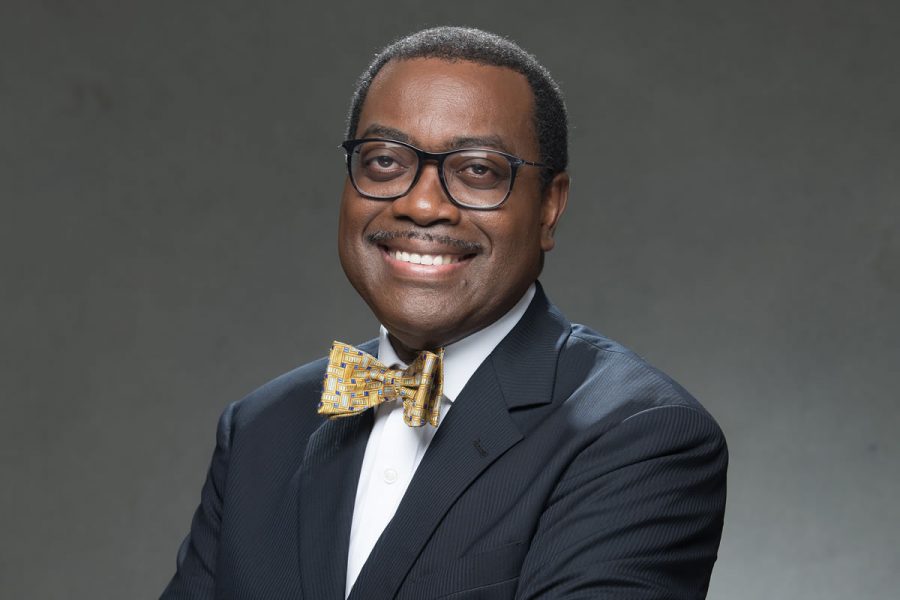
CEM REPORT | The African Development Bank (AfDB), has said it is ready to help Nigeria produce 9.5 million metric tons of food.
Dr Akinwumi Adesina, President of the African Development Bank (AfDB), disclosed this in a meeting with President Muhammadu Buhari on Tuesday at the Presidential Villa, Abuja, while briefing him on the steps taken by AfDB to avert a food crisis in Africa, in the foreseeable future.
Adesina, former Minister of Agriculture under the Goodluck Jonathan administration, said at least 5 million smallholder farmers in Nigeria would be helped to cultivate one million hectares of maize, one million hectares of rice, and two hundred and fifty thousand (250,000) hectares of sorghum and soybeans, respectively during the rainy season.
“In total, our support will help Nigeria to produce 9.5 million metric tons of food.”
He further identify the states to benefit from the assistance to include Kano, Ogun, Oyo, Kaduna, Imo, Cross River, and the Federal Capital Territory.
[READ ALSO] Prices of Food Continues to Rise in Nigeria
Furthermore he said, the AfDB has made provision of $1.5 billion for the Africa Emergency Food Plan. As measures to relief the effect of the Russia-Ukraine war.
“The AfDB had developed a $1.5 billion Africa Emergency Food Plan, which is now before the bank’s Board for approval.
“We were not ready for COVID-19, but we are now planning to avert food crisis on the continent. There is plan to help farmers cultivate wheat, maize, rice, sorghum, and soybeans. It will mitigate the impact of the Russia-Ukraine war.”
He also noted that the price of wheat had already gone up about 60%, while maize and other grains will soon be affected.
“Already, the price of wheat has gone up about 60%. Maize and other grains will also be affected. There may be fertilizer crisis, as there would be about 2 million metric tons deficit. And that will affect food production by about 20%. Africa will lose $11 billion worth of food, and coming shortly after COVID-19, that would be rather serious.”
He also outcried the risk of fertilizer crisis in Africa which will cause about 2 million metric tons deficit.
Recall that CEM reported earlier that the President World Bank Group, David Malpass, said that developing countries especially in Africa are faced with sudden price increases for fertilizer and food, among others, due to the war in Ukraine and Covid-19 related shutdown.
The World Bank had earlier urged advanced countries to keep markets open, remove trade barriers also aid in creating safety net for countries who depend largely on food import.
Ukraine is a key source of grain while Russia is a major producer of energy and fertilizer needed for agriculture, and the war is creating sudden shortages of energy, fertilizer, and food.

CEM REPORT | The price of Liquefied Petroleum Gas (Cooking Gas) has increased by 94.08 percent in Lagos within a year.
This is according to recent data published by the Nigeria Bureau of Statistics (NBS), which stating that the average price for refilling a 5kg Cylinder of Cooking Gas shot from N3,980.00 in February to N4,041.18 in March 2022, reflecting a 1.54 percent month-on-month increase in Lagos.
While the average price arcoss the country generally stood at an average of N3778.30 in March from N3708.58 recorded in February 2022, reflecting an increase of 1.88 percent month-on-month increase for refilling a 5kg cylinder.
[READ ALSO] Prices of Food Continues to Rise in Nigeria
However, on year-on-year basis, the average retail price increased by 83.62 percent from N2057.71 in March 2021.
From the report the state with the highest average retail price for refilling a 5kg Cylinder of Cooking Gas for March 2022, was recorded in Ekiti with N4200.00, followed by Niger with N4163.33 and Imo with N4150.00.
While the state with the lowest average price was Adamawa with N2604.01 followed by Yobe and Kano with N2740.00 and N3300.00 respectively in the same period.
Additional, prices analysed by zones indicates South-East as the highest with N3992.56 average retail price for refilling a 5kg Cylinder of Cooking Gas, followed by South-West with N3900.55 and South-South with N3877.08, while North-East recorded the lowest average retail price with N3419.37.
Russia – Ukraine war ongoing continues to fuel global shortage of petroleum products around the world.