
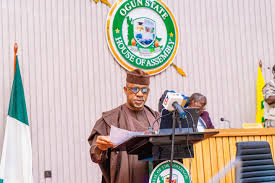
As Ogun State approaches its 50th anniversary in February, the milestone offers Nigeria a moment to reflect on the state’s enduring economic impact, strategic value, and natural endowments. Created on the 3rd February, 1976 by late General Murtala Ramat Mohammed who was Nigeria’s Head of State at the time, Ogun has steadily evolved from a largely agrarian state into one of Nigeria’s most important industrial, commercial, and investment corridors, playing a silent but decisive role in national development.
Strategically located as the gateway between Lagos and the rest of the country, Ogun State occupies a unique economic position. Its proximity to Africa’s largest city has made it a natural extension of Lagos’ industrial and residential overflow. Over the decades, this advantage has transformed Ogun into a preferred destination for manufacturers, logistics firms, and real estate developers seeking lower costs and access to major markets.
Today, Ogun State is widely regarded as Nigeria’s industrial capital outside Lagos. The state hosts hundreds of factories and industrial estates across Agbara, Ota, Sagamu, Abeokuta, Ijebu-Ode, and Ewekoro. Multinational and indigenous firms in cement, food and beverages, pharmaceuticals, plastics, steel, packaging, and consumer goods have made Ogun their production base, contributing significantly to national output, employment, and export earnings.
The economic value of Ogun State is further reflected in its strong internally generated revenue (IGR) performance relative to many states in the federation. Industrial activity, land use, taxation, and commerce have strengthened the state’s fiscal capacity, reducing overdependence on federal allocations. This growing revenue base has enabled sustained investments in infrastructure, education, and social services.
Beyond industry, Ogun State remains one of Nigeria’s most resource-rich agricultural zones. Blessed with fertile land and favorable climate, the state produces cassava, maize, rice, cocoa, oil palm, kolanut, cashew, vegetables, and poultry at scale. Its agricultural output feeds both local industries and urban markets, reinforcing national food security and agro-industrial value chains.
Ogun’s solid mineral resources also contribute to its economic relevance. The state is richly endowed with limestone, cement-grade minerals, silica sand, clay, granite, and phosphate. These resources have supported Nigeria’s cement industry, construction sector, and glass manufacturing, reducing import dependence and strengthening local production capacity.
Human capital is another pillar of Ogun State’s national importance. Often referred to as the “Gateway State of Education,” Ogun hosts some of Nigeria’s oldest and most respected universities, polytechnics, colleges of education, and research institutions. The state has produced generations of professionals, technocrats, entrepreneurs, and leaders who continue to shape Nigeria’s public and private sectors. Prof. Ayo Bamgbose – the first Professor of Linguistics in Nigeria, Prof. Oyinade Odutola-Olurin – the first female Professor of Medicine in Nigeria, Prof. Theophilus Oladipo Ogunlesi, the first Professor of Medicine in 1965, etc
Ogun State’s contribution to Nigeria’s economy also extends to logistics, trade, and regional integration. With major highways, border routes to the Republic of Benin, and growing transport infrastructure, the state functions as a critical node in West African commerce, facilitating the movement of goods between Nigeria and neighboring countries.
Over the past five decades, successive administrations have increasingly focused on investment-friendly policies, land reforms, industrial parks, power initiatives, and public-private partnerships. These efforts have reinforced Ogun’s reputation as one of Nigeria’s most business-conducive states, attracting both domestic and foreign direct investment.
At 50, Ogun State stands not just as a symbol of longevity, but as a testament to quiet productivity and strategic relevance. Its industries power Nigeria’s factories, its farms feed its cities, its minerals build its infrastructure, and its people drive its institutions. As the state looks to the next 50 years, Ogun’s challenge and opportunity is to deepen inclusive growth, sustainably harness its resources, and consolidate its position as one of Nigeria’s most valuable economic assets.
We in Continental Economy Magazine and CEM Television (Online Media) say a big congratulations to the good people of Ogun State especially the Executive Governor, His Excellency, Prince Dapo Abiodun, CON.
Long Live Ogun State
Long Live Federal Republic of Nigeria
Signed:
Patrick Akamiokhor, FCA,