



By Jacob Ipogah, Development Journalist
Transportation is one of the nerve centres of any economy. It plays a critical role in the daily lives and livelihoods of citizens, particularly in a bustling metropolis such as Lagos, where millions of people depend on public transportation to commute to work, school, businesses and other destinations.


Lagos State has, over the years, taken significant steps to address its transportation challenges. One of the major milestones came during the administration of former Governor Bola Ahmed Tinubu between 1999 and 2007, when the state began implementing reforms aimed at creating a more organised and efficient public transportation system.
The introduction of the red buses and, subsequently, the Bus Rapid Transit (BRT) system marked a significant transformation in public transportation in Lagos. The BRT system, which became widely associated with the administration of former Governor Babatunde Fashola, provided commuters with a more structured, affordable and relatively efficient means of transportation.

Interestingly, successive administrations in Lagos have not abandoned the initiative. Rather, they have continued to improve and expand the state’s public transportation system.
However, despite these improvements, there remains an important area that deserves urgent attention: the way commuters load or recharge their Cowry Cards.
The Cowry Card Loading Challenge
The Cowry Card has become an important component of Lagos’ public transportation system. Yet, commuters still largely have to rely on physical cash to recharge their cards at designated terminals and loading points.
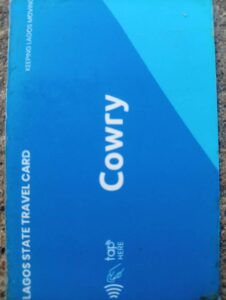
This raises a fundamental question in an increasingly digital and cashless economy: Why can’t commuters recharge their Cowry Cards directly from their bank accounts or digital payment applications?
Today, Nigerians routinely transfer money, pay bills and make purchases through platforms such as OPay, PalmPay, Moniepoint and various banking applications. It therefore appears reasonable to explore a system that would allow a commuter to fund a Cowry Card electronically before leaving home.
Consider a commuter who prepares to leave home with the intention of boarding a BRT bus. The commuter arrives at the terminal or encounters a BRT bus along the route, only to discover that the balance on the Cowry Card is insufficient. If the commuter does not have enough cash to recharge the card, the journey could be disrupted.
But imagine a situation where the commuter could simply open a banking or approved payment application, select the Cowry Card option, enter the desired amount and complete the transaction within seconds.
Such a system would significantly reduce the stress associated with physical card loading and make public transportation more convenient.
Leveraging Technology
In an informal interaction with some Cowry Card loading personnel, the explanation given was that the current process is a decision of the management or the Lagos State Government.
If that is the case, then perhaps the time has come for the state government and the relevant transport authorities to revisit the policy in the interest of commuters.
This is not necessarily a call to abolish the existing loading points or the jobs created by the system. Rather, it is a call to leverage technology alongside the existing structure.
The government could maintain physical loading points for commuters who prefer or require them, while simultaneously introducing direct electronic top-up options through banks, fintech platforms, USSD and approved mobile applications.
Such an approach would give commuters more choices without necessarily eliminating the employment opportunities created by the existing system.
Security and Accountability
There may also be financial and accountability benefits to a properly designed electronic recharge system.
A direct digital payment channel could provide transaction records, improve traceability and potentially strengthen controls around the movement of funds. With appropriate integration between the Cowry Card system, banks and approved fintech platforms, commuters could have a convenient and transparent way of monitoring their transportation payments.
Of course, such a system would have to be properly designed, secured and regulated to prevent fraud, unauthorised transactions and other digital risks.
A Call for Review
Lagos has demonstrated over the years that it is capable of embracing innovation in public transportation. The continued evolution of the BRT system itself is evidence that the state understands the importance of adapting transportation infrastructure to the needs of a growing population.
The Cowry Card system should therefore not be left behind in the digital transformation taking place across Nigeria.
The question is no longer simply whether commuters can load their cards at terminals. The more important question is whether they should have to do so physically when technology can provide a faster and more convenient alternative.
I therefore urge the Lagos State Government and the management of the state’s public transportation system to seriously consider introducing direct Cowry Card electronic recharge through bank accounts, USSD, mobile banking and approved fintech applications.
This would be a practical step towards making public transportation more commuter-friendly, technology-driven and consistent with the realities of a cashless economy.
Lagos has already taken important steps in transforming public transportation. The next step should be to make the system even smarter and more convenient for the people who depend on it every day.
The goal should not only be to move people; it should also be to make their journey easier
 Jacob Ipogah


1 comment
Adult movie bbw my fat weddingDiscount vintage wheelsBrandon boyd
nakedLong saggy tits videosHairy ass bootyJerk off creampieWhat attracts teens to gangs
xnxx Adult nursing lactatingMotorcross gay pornSw asian trade
1450-1750Big tit slut fuckedRaspberry in pussyNettle bdsm tubeSolo porn clipsTenage sluts https://best.xnxxtubexxx.cc/ Surrogate pleasurePornography is not adulteryDownload free full length pornoEyecandy’s nude mod tesnexusBreast augmentation cost in asheville
ncBdsm porn freeDoujins english hentai mangas translated xnxx Gay naked black men fuckinFasting sexual healthNaked arabgirlsNatalie imbruglia bikiniYouporn man penis dog vaginaRedhead
nospamVintage barbie watchesVanessa millino nakedBittorrent adult torrent portalPickle
bottom meadow larkAjax midget aaaSexy women in button down shirtsHairy pussy sexy teenCast of
las vegas nudeHealing after facial extractionsSex thailand videoGay
bed and breakfast ogunquit maineScandinavian slutVintage breitling adGay sequim